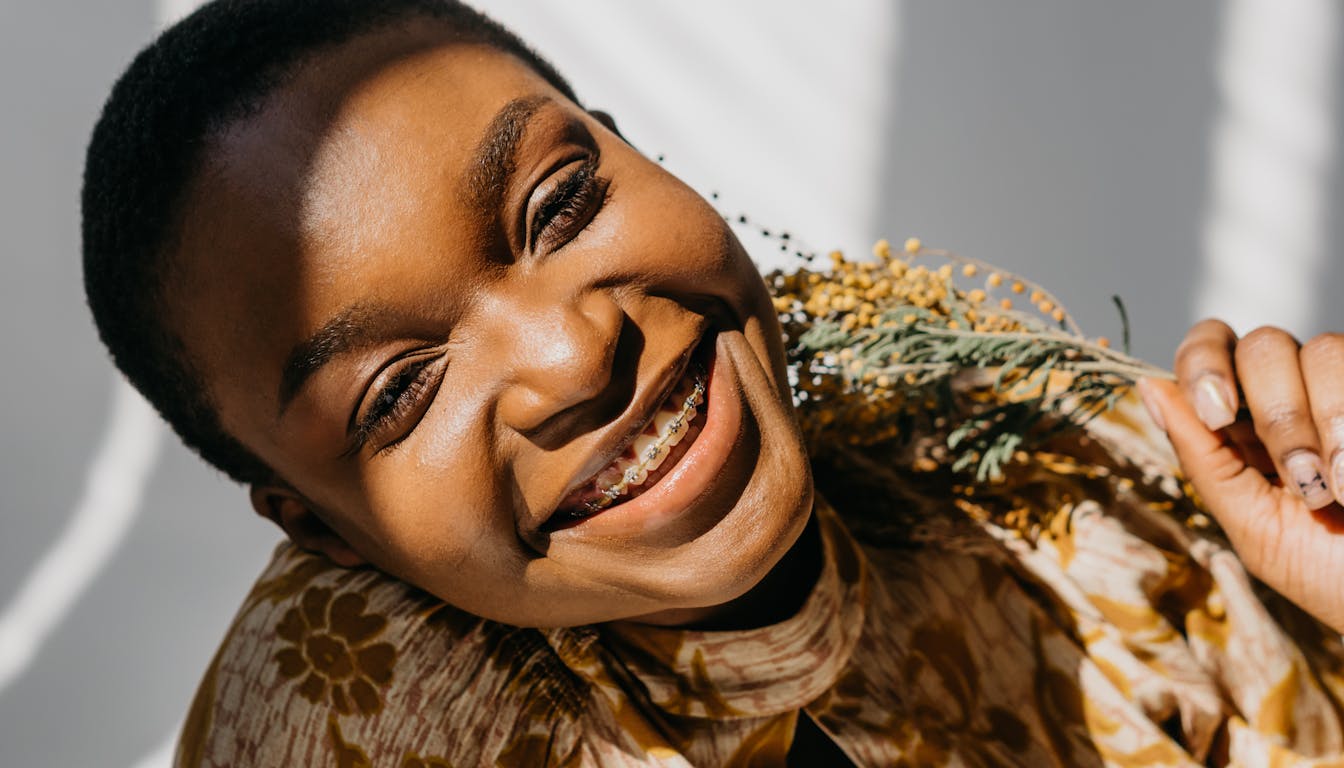
If you've ever caught your reflection in a Midtown elevator and wished your teeth were a little straighter, you're not alone. We see new patients in our Madison Avenue office every week who've been thinking about braces for years — sometimes decades — but assumed the window for orthodontics quietly closed sometime in high school. It didn't. Adults make up a growing share of orthodontic patients in New York City, and modern treatment options are gentler, faster, and far more discreet than what most of us remember from middle school.
Whether you're a 32-year-old attorney prepping for partnership, a 45-year-old parent who's finally putting yourself first, or a 60-year-old retiree who's tired of hiding your smile in photos, this guide will walk you through what adult orthodontics actually looks like in 2026 — from the options on the table to the costs, timelines, and trade-offs that matter most.
Is It Really Too Late to Get Braces as an Adult?
The short answer is no. Teeth can be moved at almost any age, provided the supporting bone and gum tissue are healthy. We routinely treat patients in their 40s, 50s, and 60s, and the results are every bit as transformative as they would be at 16. The biology is the same: gentle, sustained pressure encourages bone to remodel around the tooth, allowing it to shift into a new position.
What does change with age is the pace and the prep work. Adult bone is denser than adolescent bone, so teeth tend to move a little more slowly. We also need to take a closer look at the foundation before we begin — that means evaluating gum health, checking for any active decay, and making sure existing crowns, bridges, or implants will play nicely with the treatment plan. Implants, for instance, don't move with orthodontic forces, so we have to plan around them. None of this is a deal-breaker; it just means a thorough workup matters more for adults than for teens.
Why More NYC Adults Are Choosing Orthodontics Now
Three things have shifted the conversation. First, the technology has caught up with how adults want to live. Clear aligners, tooth-colored ceramic brackets, and lingual braces (which sit behind the teeth) make it possible to straighten your smile without anyone in your Tuesday meeting noticing. Second, scanning and 3D treatment planning have replaced the old goopy impressions, so the experience itself is far more comfortable. Third, NYC adults are increasingly thinking about long-term oral health, not just aesthetics — and crowded or crooked teeth are genuinely harder to keep clean, which means a higher lifetime risk of cavities, gum disease, and uneven wear.
Many of our Midtown Manhattan patients also tell us they're tired of feeling self-conscious on Zoom or in client-facing roles. A straighter smile isn't vanity; it's confidence in rooms where confidence matters.
Your Options: Clear Aligners, Ceramic Braces, Metal, and Lingual
There's no single best option for adults — only the best option for your specific bite, lifestyle, and goals. Here's how the main choices stack up.
Clear aligners (Invisalign and similar systems) are by far the most popular adult choice in NYC. You wear a series of custom, nearly invisible plastic trays that gradually nudge your teeth into place. You take them out to eat, brush, and floss, which is a huge advantage for both hygiene and quality of life. Aligners work beautifully for mild to moderate crowding, spacing, and many bite issues, but require commitment — most cases need 20 to 22 hours of daily wear to stay on track. If you're someone who'll wear them religiously, aligners are often the easiest fit for a busy professional life.
Ceramic (clear) braces use tooth-colored brackets bonded to the front of your teeth. They're far more visible than aligners but much less obvious than traditional metal. They're a strong choice for adults who need more complex tooth movement than aligners can comfortably handle, or who know they won't wear removable trays consistently.
Traditional metal braces are still the workhorse of orthodontics. They're efficient, cost-effective, and capable of correcting almost any case — including the most complex ones. Modern metal brackets are smaller and smoother than the ones older adults remember, and treatment is typically faster than with aligners for difficult cases.
Lingual braces are bonded to the back of your teeth, making them invisible from the outside. They're a great option for adults in highly visible roles — broadcasters, executives, performers — who can't have anything showing on the front of their teeth. They tend to be more expensive and require an adjustment period for your tongue.
How Long Does Adult Orthodontic Treatment Take?
Most adult cases run 12 to 24 months, though minor cases can wrap up in as little as six months and complex bites occasionally need 30 months or more. A few factors influence the timeline. The severity of your starting position is the biggest one — closing a small gap is much faster than rotating a stubborn molar. Your treatment type matters too: clear aligners can be slightly slower for certain movements, while traditional braces tend to be most efficient for complex cases. Your biology plays a role as well, since some patients' teeth simply move faster than others. Compliance is enormous: aligner patients who wear their trays the recommended hours finish on schedule; those who don't, don't.
At your initial consultation, we'll give you a realistic range based on 3D scans and a detailed exam, and we'll update you at each check-in if anything changes.
What Do Adult Braces Cost in NYC?
Manhattan orthodontic fees vary widely, but most adult comprehensive treatment in NYC falls between $4,500 and $9,500. Here's a general sense of the ranges we see across the city:
Clear aligners (Invisalign) typically run $4,500 to $8,500 for full treatment, with limited or "express" cases sometimes available from $2,500 to $4,500. Ceramic braces usually fall in the $5,000 to $8,000 range. Traditional metal braces are often the most economical option at $4,000 to $7,500. Lingual braces are the most premium choice, generally $8,000 to $13,000 because of the custom fabrication and added technical complexity.
These ranges include diagnostic records, the appliances themselves, all adjustment visits, and a set of retainers at the end. They don't always include extras like additional aligner refinements, replacement retainers years later, or any restorative work that might be needed first (like treating a cavity or replacing a failing crown). Always ask for a written, all-in fee so you know exactly what's included.
Will Insurance Cover Adult Orthodontics?
Most dental insurance plans in New York include some orthodontic benefit, but the details vary enormously. Many plans have a lifetime orthodontic maximum (often $1,000 to $3,000) that applies once per patient — and some plans only cover orthodontics for dependents under 19. We help every patient run a thorough benefits check before treatment starts, so there are no surprises.
Even if insurance only covers a portion, most NYC practices — including ours — offer interest-free in-house payment plans that spread the cost across the length of treatment. Health Savings Accounts (HSAs) and Flexible Spending Accounts (FSAs) can also be used for orthodontics, which is a meaningful savings for patients in higher tax brackets.
What Will the Process Actually Look Like?
Every case is different, but here's a typical roadmap for adult orthodontic treatment at our Midtown Manhattan office.
It usually begins with a consultation visit, where we listen to what you want to change about your smile, do a thorough exam, and take a 3D scan of your teeth. There's no goop, no gagging — just a small wand we move around your mouth for a few minutes. From those images, we can show you a digital preview of your potential outcome, often within minutes.
If you decide to move forward, we'll build your treatment plan, which involves working with our lab or aligner provider to map out every tooth movement and the timing of each stage. For braces, we'll bond your brackets in a single visit; for aligners, your custom trays arrive a couple of weeks after the scan.
Then comes the active treatment phase, with check-ins every 6 to 10 weeks. These visits are quick — usually 15 to 30 minutes — to monitor progress, swap aligner trays as needed, or adjust wires. We use these visits to flag anything that needs attention, like a bracket that's loosened or a tooth that's not tracking quite as planned.
At the end of treatment, we move into retention, which is the most important — and often most overlooked — phase of the entire process. Without retainers, teeth will gradually drift back. We typically recommend full-time wear for the first few months, then nighttime wear indefinitely. Retainers are the price of admission to keeping your investment for life.
What About Pain, Diet, and Daily Life?
Adult orthodontics is generally well tolerated, but there's an honest adjustment period. Expect mild soreness for a few days after each adjustment or new aligner tray — most patients describe it as pressure rather than pain, and over-the-counter ibuprofen handles it easily. Sticky and very hard foods (think caramel, popcorn kernels, hard pretzels) are off-limits with traditional braces; with aligners, you can eat anything you want as long as you take the trays out.
The biggest daily-life shift is hygiene. Braces require more meticulous brushing and flossing, often with the help of interdental brushes or a water flosser. Aligners need to be removed and rinsed every time you eat, and your teeth need to be brushed before you put them back in. Skipping these steps invites cavities, decalcification (those white square outlines around old bracket sites), and gum inflammation. None of it is hard — it just becomes a new daily rhythm.
Will Braces Affect My Job, My Speech, or My Social Life?
For most adults, the answer is no — or only briefly. Clear aligners are practically invisible in normal conversation, and most people you meet won't realize you're wearing them. Lingual braces are completely hidden from the outside but cause a lisp for the first week or two while your tongue adapts. Ceramic braces are visible up close but blend in well from a normal speaking distance. Traditional metal braces are the most noticeable, but in a city where adult orthodontics is increasingly common, they no longer raise eyebrows the way they once did.
The bigger social effect is usually positive: patients tell us they smile more freely halfway through treatment than they did before they started, even with the appliances still on.
Risks and Honest Trade-offs
Orthodontics is safe when done well, but no medical procedure is risk-free. The most common issues for adults include gum recession in patients with already-thin gum tissue, root shortening (called root resorption) in a small percentage of cases, and relapse if retainers aren't worn faithfully. Patients with a history of periodontal disease need to have it controlled before — and during — treatment, since orthodontic forces on inflamed gums can accelerate bone loss.
This is where careful planning and a clinician who treats adults regularly makes a real difference. Adult orthodontics isn't just teen orthodontics in older bodies; it requires attention to gum health, restorations, jaw joint function, and aesthetic detail in a way that pediatric cases often don't.
Choosing the Right Provider in NYC
Manhattan is full of options, from chain aligner shops to high-end specialty practices. A few things worth weighing as you decide.
Look for someone who offers multiple treatment modalities — not just the one they specialize in selling. A provider who only does aligners will recommend aligners; a provider who only does braces will recommend braces. The right answer for your case might be either, or a combination, and you want a clinician who can honestly tell you which.
Ask about treatment planning and monitoring. Are visits in person, or is some of it done remotely through an app? Both can work, but you want to understand the model upfront. For complex cases, in-person check-ins matter more.
Pay attention to communication style. Adult orthodontic treatment is a long relationship — you'll be seeing your provider regularly for a year or two. The consultation should feel like a thoughtful conversation, not a sales pitch.
Finally, consider retention support. Some practices include retainer replacements for several years; others charge each time. Given how long you'll be wearing retainers, this is worth asking about.
Adult Orthodontics at FORME Dental
At FORME Dental, we approach adult orthodontics the way we approach everything else: with careful planning, modern technology, and a focus on the long-term health of your smile, not just the short-term cosmetic result. Our office at 575 Madison Avenue, Suite 1503, in the heart of Midtown Manhattan is built around making complex care feel calm and unhurried — the opposite of the assembly-line orthodontic experience.
We offer Invisalign, ceramic braces, and traditional metal braces, and we collaborate with trusted orthodontic specialists for the most complex cases. Every adult patient gets a comprehensive consultation that includes a 3D scan, a discussion of all viable options, a clear treatment plan, and a transparent fee — so you know exactly what you're committing to before you start.
Whether you're exploring orthodontics for the first time or revisiting an idea you've had for years, we'd love to talk through what's possible. You can reach our front desk at (347) 460-5603 or stop by our Midtown Manhattan office to meet the team.
Ready to talk through your options? Explore our services or book a consultation at FORME Dental.
← Back to Journal